How to Become a Tank: The Beginner’s Guide to Hybrid Training
Want to build muscle, become stronger, run longer distances and improve your overall athleticism?
You don’t have to choose between being strong and having good endurance.
You can build both.
That’s the idea behind hybrid training, an approach that combines strength training with endurance activities such as running, cycling or swimming. The goal isn’t just to look athletic. It’s to build a body that can perform across different physical challenges.
In this guide, we’ll break down how beginners can start training like hybrid athletes without making their routines unnecessarily complicated.
What Does It Mean to Be a Tank? 
Being a tank isn’t just about having big arms, a muscular chest or visible abs.
It’s about developing a combination of:
- Strength: Being able to lift challenging weights with good technique.
- Muscular endurance: Maintaining performance during repeated efforts.
- Cardiovascular fitness: Improving your ability to run, cycle or perform sustained activity.
- Mobility: Moving your joints through useful ranges of motion.
- Recovery: Getting enough sleep, food and rest to adapt to training.
The goal is to become strong, fit and capable, rather than focusing on only one aspect of fitness.
What Is Hybrid Training?
Traditional bodybuilding usually prioritises muscle growth. Endurance training focuses on activities such as running, cycling and swimming.
Hybrid training combines both.
A hybrid athlete might lift weights three days a week, run twice a week and cycle or perform another endurance session on a separate day.
You don’t need to become an elite runner or a competitive powerlifter. You need a balanced programme that helps you improve multiple abilities without overwhelming your recovery.
Step 1: Build Your Strength Foundation
Strength training helps develop muscle, strength and resilience.
Beginners can start with fundamental movement patterns:
- Squats or leg presses
- Hip hinges, such as Romanian deadlifts
- Horizontal pushing, such as bench presses or push-ups
- Pulling movements, such as rows and lat pulldowns
- Overhead presses
- Core exercises
Start with manageable weights and prioritise good technique. Increase resistance or repetitions gradually as your performance improves.
You don’t need an extremely complicated workout split to get results. Consistency and progressive overload matter more than constantly changing exercises.
Step 2: Develop Your Endurance
If you spend most of your time lifting weights, begin by adding manageable amounts of cardio.
Choose an activity you enjoy:
- Running
- Cycling
- Swimming
- Brisk walking
Start at a pace that allows you to maintain a conversation. Gradually increase the duration or distance rather than trying to run as fast or as far as possible on day one.
As your fitness improves, you can add faster intervals or more demanding sessions. These should complement your strength training rather than leave you exhausted for every workout.
Step 3: Follow a Balanced Weekly Plan
Here’s an example of how a beginner might organise training across a week.
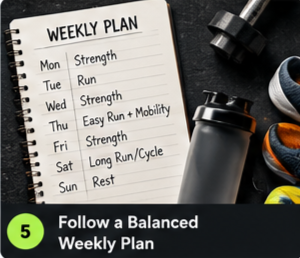 Monday: Full-body strength training
Tuesday: Easy running or cycling
Wednesday: Full-body strength training
Thursday: Easy endurance session and mobility
Friday: Full-body strength training
Saturday: Longer, comfortable endurance session
Sunday: Rest or gentle walking
This is an example, not a universal prescription. Your training frequency should depend on your experience, current fitness and recovery. If you’re new to exercise, start with fewer sessions and build up gradually.
Try to avoid placing your hardest running sessions immediately before demanding leg workouts. When strength and endurance sessions interfere with each other’s recovery, adjust their intensity, duration or spacing.
Step 4: Eat to Support Your Training
Training provides the stimulus, but your body also needs adequate nutrition to adapt.
Focus on these basics:
Protein: Include protein-rich foods such as milk, curd, paneer, eggs, dal, beans, soy and other suitable sources.
Carbohydrates: Foods such as rice, roti, oats, potatoes and fruit can support demanding workouts and endurance sessions.
Healthy fats: Include appropriate sources such as nuts, seeds and other unsaturated-fat-rich foods.
Hydration: Drink regularly throughout the day, with additional fluids when training conditions and sweat losses require them.
You don’t need an expensive supplement stack to get started. Build consistent eating habits first and adjust your food intake to your training demands and goals.
Step 5: Take Recovery Seriously
More training is not always better.
Your body needs time to recover between demanding sessions. Aim for consistent sleep, schedule easier days, and increase training volume gradually.
Persistent fatigue, declining performance, unusual pain or poor sleep can be signs that your programme needs adjustment. Don’t ignore them in the pursuit of becoming stronger.
Step 6: Track Your Progress
Don’t judge progress only by how you look in the mirror.
Track a few simple measurements:
- Strength: weights and repetitions performed with good technique
- Endurance: running or cycling duration and distance
- Consistency: completed sessions each week
- Recovery: sleep, fatigue and how you feel during training
Compare your results over several weeks rather than expecting dramatic changes overnight.
You can use a notebook or a spreadsheet to begin with. More advanced tracking tools can come later.
Final Thoughts: Build Your Own Version of a Tank
Becoming a hybrid athlete is a process, not a seven-day transformation.
Build your strength foundation, develop endurance gradually, eat to support your activity and recover properly. You don’t need to train like a professional athlete to become stronger and fitter than you were yesterday.
Start where you are. Stay consistent. Let the results compound.
Welcome to Hybrid Hustle. Lift with purpose. Build your engine. Become capable of more.
Note: This article provides general fitness education, not individual medical or training advice. Adjust exercise to your abilities and seek qualified guidance when needed.
Leave a Reply